Stories and guides · Planning your session
Family portraits when your teenager isn't keen
5 July 2026
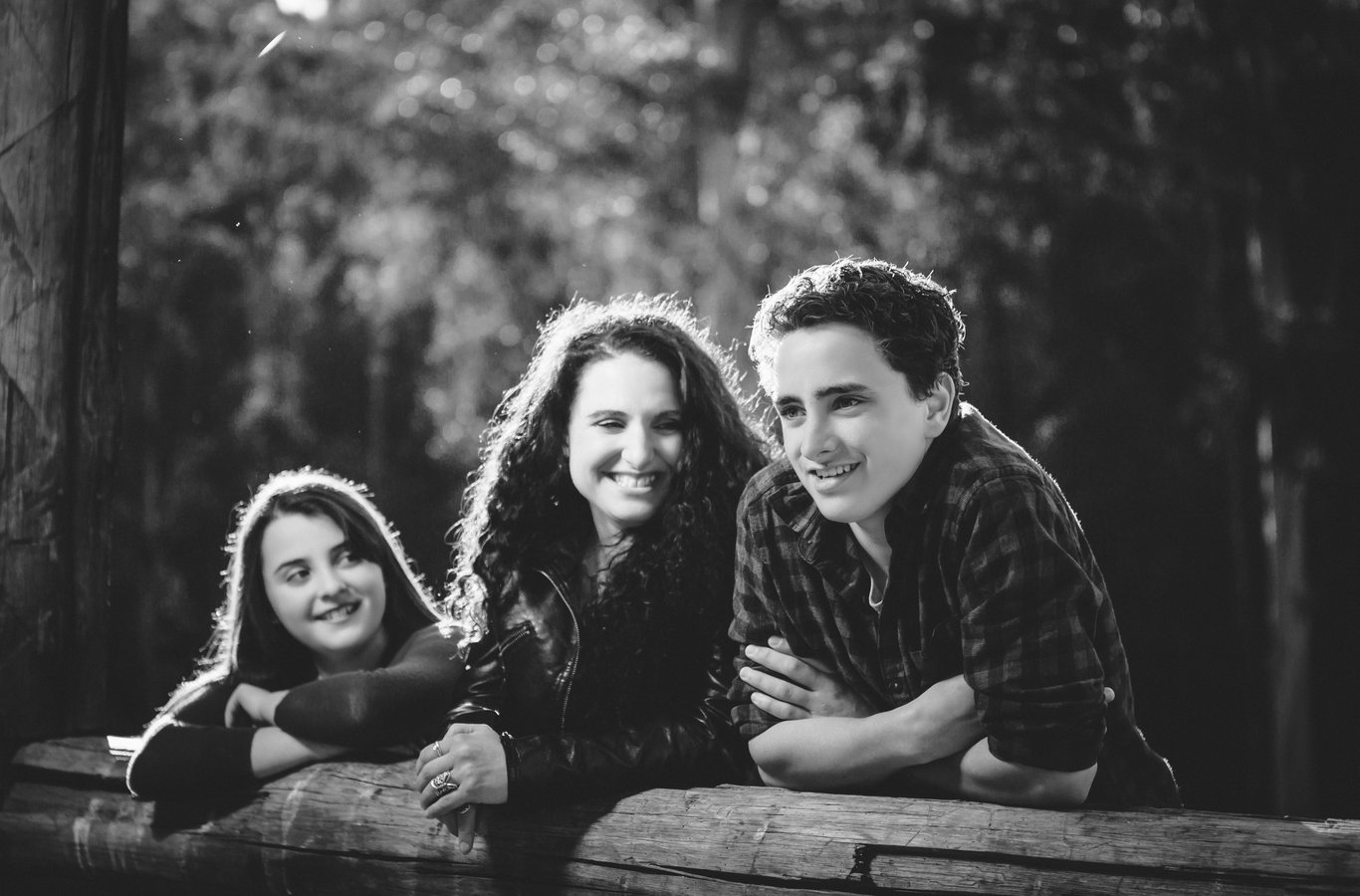
A teenager who doesn't want to be in family portraits is usually resisting the idea of standing stiffly in a row and smiling on command, not the idea of being photographed with the people they love. Ask them why, rather than insisting they turn up. Bring them into the planning instead of presenting the session as a done deal, and let go of any posed, cheesy setup yourself. Most of the resistance comes from what they imagine the session will be, and that imagined version is usually worse than the real one.
Why teenagers push back
Teenagers are working out who they are, and a lot of that work happens in how they want to be seen. A forced, cheerful pose asks them to perform a version of themselves they may not recognise, in front of people whose opinion matters more than almost anyone's. That's not shyness so much as a reasonable objection to being made to look fake.
There's also the practical reality of image control. A teenager who has spent years working out how they want to look in a photo they choose is now being asked to trust someone else's judgement of a moment they didn't select. That's a bigger ask at fifteen than it was at five, and treating it as a small thing is where most of the friction starts.
Respecting that is the starting point, not a concession. A teenager who feels steamrolled into a session will look steamrolled in the portraits. One who's had a say in it, even a small one, shows up differently. That's true even when they can't quite explain the difference themselves. Most teenagers just know instinctively when they're being managed rather than included, and that distinction changes the whole mood of a session before it even starts.
Give them a genuine say
The fix isn't persuasion, it's involvement. Bring your teenager to the consultation if they're willing, so they hear directly what the session actually is and see the finished work on the gallery walls rather than relying on your description of it. Let them weigh in on what they wear, and on timing, since sessions are built around light and around the family's routine, and a teenager who's had a say in when and how is a different participant to one who's simply been told to be ready.
None of this needs to turn into a negotiation with conditions attached. It's closer to including them as someone with a stake in the outcome, which is closer to the truth. If you're also managing an extended family group alongside a reluctant teenager, the planning principles are much the same, and our guide to planning an extended family portrait covers how to bring a bigger group together without anyone feeling herded.
Small choices carry more weight than they seem to. Whether they'd rather stand close to a sibling or slightly apart, whether they want their hair a certain way, whether they'd prefer an early start before the rest of the house is even awake. None of these change how a session is directed, but each one hands back a small piece of the control a teenager feels they've lost in agreeing to turn up at all, and together they tend to matter more than any single big gesture would.
Sessions are directed, not staged
The other half of the fix is what actually happens on the day. Arek directs a portrait session rather than staging it. There's no list of forced poses and no instruction to hold a smile until it looks painted on. Direction means guiding where people stand, how a moment is framed, when to let a conversation run, so what's captured is a real interaction rather than a performance of one.
For a teenager, that difference matters more than almost anything else you can say to reassure them. A directed session leaves room for someone to lean into a joke with a sibling, or stand slightly apart in a way that's actually them, rather than freezing into a smile that photographs badly because it was never genuine to begin with. What makes a portrait worth keeping usually comes down to exactly that kind of honesty, which is the whole idea behind what makes a portrait meaningful.
What this looks like on the day
A session with a reluctant teenager tends to loosen once it starts, because the anticipation is almost always worse than the reality. Early on there might be some folded arms and a bit of distance, and that's fine. Direction works with what's there rather than fighting it, drawing out an interaction rather than demanding one.
Timing helps too. Sessions are scheduled around sunrise or sunset for the light, and around the age and routine of the people in them, and a teenager is far more workable at a time that suits how they actually function than at an hour chosen without them in mind.
A parent's instinct is often to fill an awkward pause, to prompt a smile or nudge a pose back into place. Resisting that instinct usually helps more than giving in to it. Left alone for a minute, most teenagers settle into something closer to how they actually stand around people they trust, and that settled moment is the one worth having on the wall, not the one where everyone's holding a smile for the count of three.
The best portraits of teenagers rarely show them smiling straight at the camera. They show them being themselves, next to the people who matter to them.
The regret of the gap years
Ask most parents which years of family portraits they wish they had, and it's rarely the toddler years, since almost everyone photographs those. It's the stretch from around thirteen to eighteen, the years families quietly stop bothering because the teenager didn't want to and nobody pushed past that. Those years pass fast, and the version of your child who exists at fifteen doesn't exist again. A resistant teenager now is still a teenager you'll wish you had portraits of later.
If you've got portraits from the toddler years already, our guide to preparing toddlers for a portrait session shows how differently a young child's session is planned, and the contrast is the point. A toddler's session is built around naps and short attention spans. A teenager's is built around agency and honesty. Both are worth doing properly, and neither should be skipped because the middle years feel like the hard ones to get through the door.
Every portrait begins with a conversation at the Belgrave gallery.