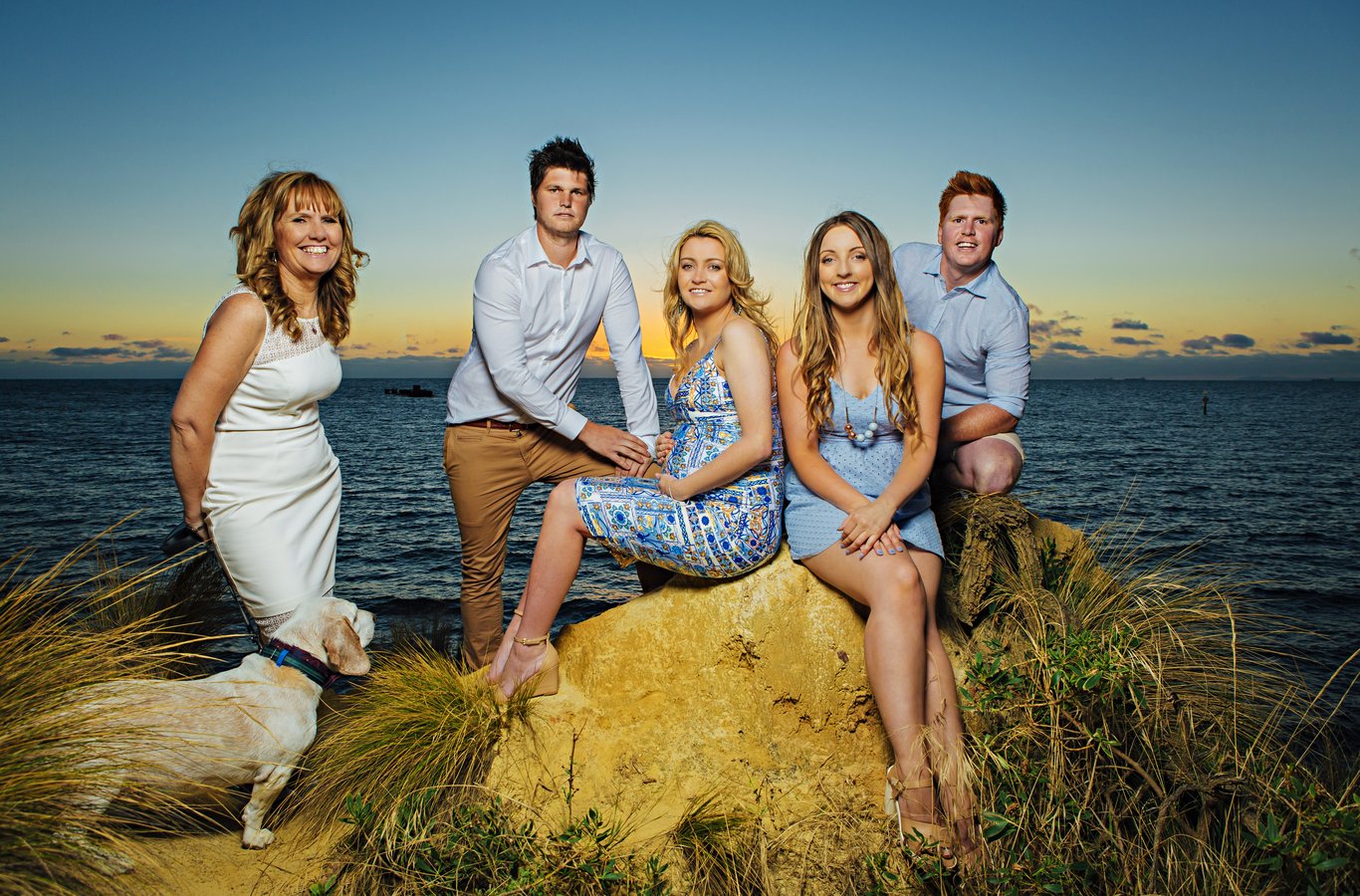
Choose clothing that coordinates rather than matches, in colours that sit comfortably together, and pick pieces everyone can move and sit in without fussing. Aim for soft, muted tones over bright primaries or busy prints, skip anything with a large logo or character on it, and think about what the session location looks like so your clothing works with it rather than against it. Comfort matters more than formality: a portrait of a family fidgeting in stiff new shoes never looks as natural as one of a family who forgot what they were wearing within the first five minutes.
Coordinate, don't match
The instinct to put everyone in the same white shirt and jeans is understandable, but it usually works against the portrait. When five people wear identical outfits, the eye reads them as a uniform rather than as individuals, and the faces, which are the actual point of the exercise, get less attention than they deserve.
A better approach is to choose a palette, not an outfit. Pick two or three colours that sit well together, tan and cream and soft blue, or sage and charcoal and blush, then let each family member wear something within that range. Textures can vary too. A knit jumper, a linen shirt and a simple dress can all belong to the same palette while looking like they were chosen by three different people, because they were. That variation is what gives a group portrait depth instead of flatness.
If you're planning a session with grandparents, aunts, uncles and cousins as well as your immediate family, the coordination question gets more involved. Our guide to planning an extended family portrait goes into how to manage a shared palette across a bigger group without it turning into a group project nobody enjoys.
Comfort first, always
Whatever looks good on a hanger has to survive an hour or two of actual movement, sitting, standing, walking and, if there are young children involved, a certain amount of wriggling. Choose fabrics that breathe, shoes that have already been worn in, and layers that can come off if the weather warms up. A jacket someone keeps tugging at, or shoes that pinch, shows in a portrait as tension in the shoulders and a fixed smile, even when nobody says a word about it during the session.
This matters even more with toddlers and young children, who will simply refuse to cooperate in something itchy or restrictive no matter how nicely it photographs. Our guide to preparing toddlers for a portrait session covers this in more detail, including how to choose something they'll actually keep on.
Avoid logos, characters and heavy patterns
A shirt with a favourite cartoon character or a brand logo across the chest anchors a portrait to a particular year, and not in a way that ages well. The same goes for busy patterns, checks, stripes and florals that compete visually rather than complementing what's around them. A plain top or a subtle, small-scale texture wears far better over time, both literally and in the portrait itself.
This isn't about being precious. It's simply that the goal of the session is a piece you'll want on the wall in ten years, and clothing choices that feel current now are usually the first thing that dates a portrait later. Simple, well-fitted, good-quality basics hold up regardless of when the portrait was taken.
Think about where you're being photographed
Your clothing doesn't exist on its own. It sits against a location, whether that's the studio, a loungeroom at home, or somewhere in the Dandenong Ranges, and the strongest portraits come from clothing that contrasts gently with that setting rather than blending into it or clashing with it.
If your session is outdoors among greenery, avoid head-to-toe green or khaki that disappears into the background, and lean toward warmer neutrals that stand out softly against foliage. If you're being photographed at golden hour, the light itself carries a warm tone, so cooler blues and greys tend to sit beautifully against it while heavy black can feel flat. Our guide to choosing a sunrise or sunset session explains how the timing of your session affects the light, which is worth reading before you settle on a palette.
Plan it a week or two ahead, not the morning of
Outfit decisions made the morning of a session tend to be rushed, and rushed decisions are where mismatched patterns and last-minute ironing disasters happen. Give yourself a week or two to lay everything out together, try combinations side by side, and notice anything that needs washing, steaming or a quick alteration.
The families who arrive relaxed are almost always the ones who sorted their clothing days earlier, not the ones who found the perfect outfit.
It's also worth trying everything on together in the room you'll be getting ready in, not separately in different houses, so you can see how the colours and textures actually sit next to each other rather than guessing from memory or a phone photo.
Where to go for more detailed guidance
If you'd like a fuller reference beyond these principles, a free family styling guide is available from our home page, covering colour pairing, seasonal considerations and specific combinations that photograph well together. You'll find it linked from the home page.
Whatever you choose, the aim is the same: clothing that lets your family look and feel like themselves, rather than like they're wearing a costume for the occasion. Get that right and the rest of the portrait tends to take care of itself.
Every portrait begins with a conversation at the Belgrave gallery.