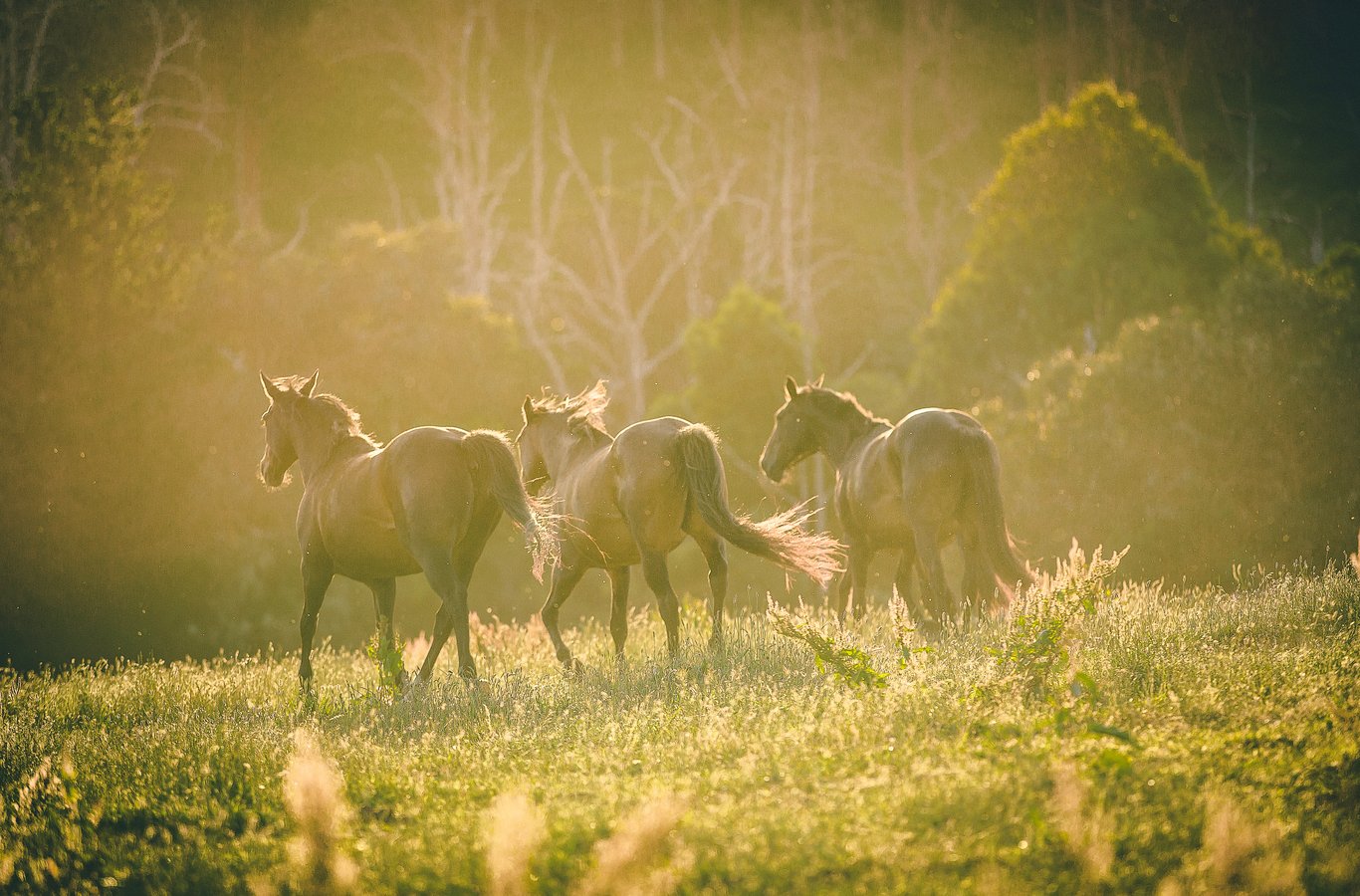
A horse portrait session is built around your horse's routine, not the other way round. Expect three parts: a consultation where we plan the details, a session timed for early morning or late afternoon light and scheduled around feeding so your horse is settled rather than distracted, and a viewing appointment about a week later where you choose the pieces you want made. Bring a handler, expect grooming beforehand, and expect the session itself to move slowly and quietly.
The consultation comes first
Before anything is scheduled, we sit down at the Belgrave gallery for an hour. You'll see finished artwork, understand pricing in full, and we'll talk through your horse specifically, temperament, routine, whether he's stabled or paddocked, how he behaves around unfamiliar equipment and people. This is where location gets decided too. Some sessions happen at your property, others suit the studio better depending on what you're after. Nothing about pricing is a surprise later. It's all shown openly at this first meeting.
Timing works around feeding, not the clock
The best light for a horse's coat sits at the edges of the day, early morning or the last hour before sunset, and that's deliberate rather than a scheduling convenience. Low sun brings out colour and depth in a coat that midday flatness simply washes out. If your horse is unsettled or distracted around normal feeding times, we build the session around that rather than fighting it. A horse who's just been fed, or who's expecting to be fed and isn't, tends to be restless in front of a camera. Getting this sequencing right matters more than most people expect walking in. If you're weighing sunrise against sunset for your own reasons, our guide to choosing between the two goes into the tradeoffs in more depth, most of which apply to horses as much as people.
Grooming and presentation
A groom in the days beforehand, not the morning of, gives the best result. Rushed grooming right before a session can leave a horse fidgety just when you want him settled, whereas a horse who was bathed and brushed out calmly a day or two prior tends to be far more relaxed in front of the camera. Clean and settled photographs better than freshly done but agitated. If there's tack or a particular halter you want in the portrait, mention it at the consultation so we can plan around it rather than deciding on the day.
Why a handler matters
Every equine session has a handler, and it's usually you. That's not incidental. The actual subject of these portraits is rarely the horse alone, it's the relationship between you and him, the ease of how he stands near you, how he responds to your voice, the trust that's visible in the way he holds himself around you. A second handler on hand, someone your horse already knows, is worth arranging too, so there's always a calm and familiar presence managing him while the two of you are the focus. Our broader guide to equine portrait sessions covers more on how we approach horses specifically, including sessions where it's just the horse rather than horse and owner together.
Directed, not posed
We don't pose horses, and we don't pose you either. A session is directed, meaning we set up the conditions, the light, the position, the moment, and then let what's real happen in front of the camera. For horses that means giving enough time for a horse to settle into a spot rather than forcing a stance, and watching for the natural moments, ears forward, a nuzzle, a quiet stand together, rather than manufacturing them. It tends to take longer than people expect and that's by design. Rushing a horse into a pose almost always shows in the final image.
That approach shapes the pace of the whole session. We'll ask you to stand somewhere with good light and space, then simply be with your horse the way you normally would, brushing his neck, standing close, talking quietly. Some of the strongest portraits come from the minutes either side of the moments you'd think to plan for, so we tend to keep shooting a little longer than seems necessary rather than stopping the second we've got what we came for.
After the session
Around a week later, you'll come back to the Belgrave gallery for a viewing and design appointment. This is where you go through the full set from the session and choose favourites, then design the finished artwork together, whether that's a piece of premium canvas for the hallway, a collection of pieces, or a keepsake album. Everything is artisan printed and hand finished, ready for collection within three weeks of that design appointment. You'll collect your pieces in person at the gallery.
What to have ready before you book
A few things are worth sorting before the consultation rather than after:
- A rough sense of your horse's daily routine, feeding times especially, so we can plan session timing around it
- Who your second handler will be, if it's not you holding the lead
- Any tack, rugs or specific gear you'd want included or excluded from the frame
- Your property's access if the session is happening there rather than at the studio, gates, parking, any other animals nearby
Most families investing in a session like this spend between $1,500 and $3,000 on the finished artwork, and payment plans are available. There's a full product guide if you want to look through pieces and pricing before the consultation, and the free styling guide is worth a read too if you and your horse are both going to be in frame together.
Every portrait begins with a conversation at the Belgrave gallery.