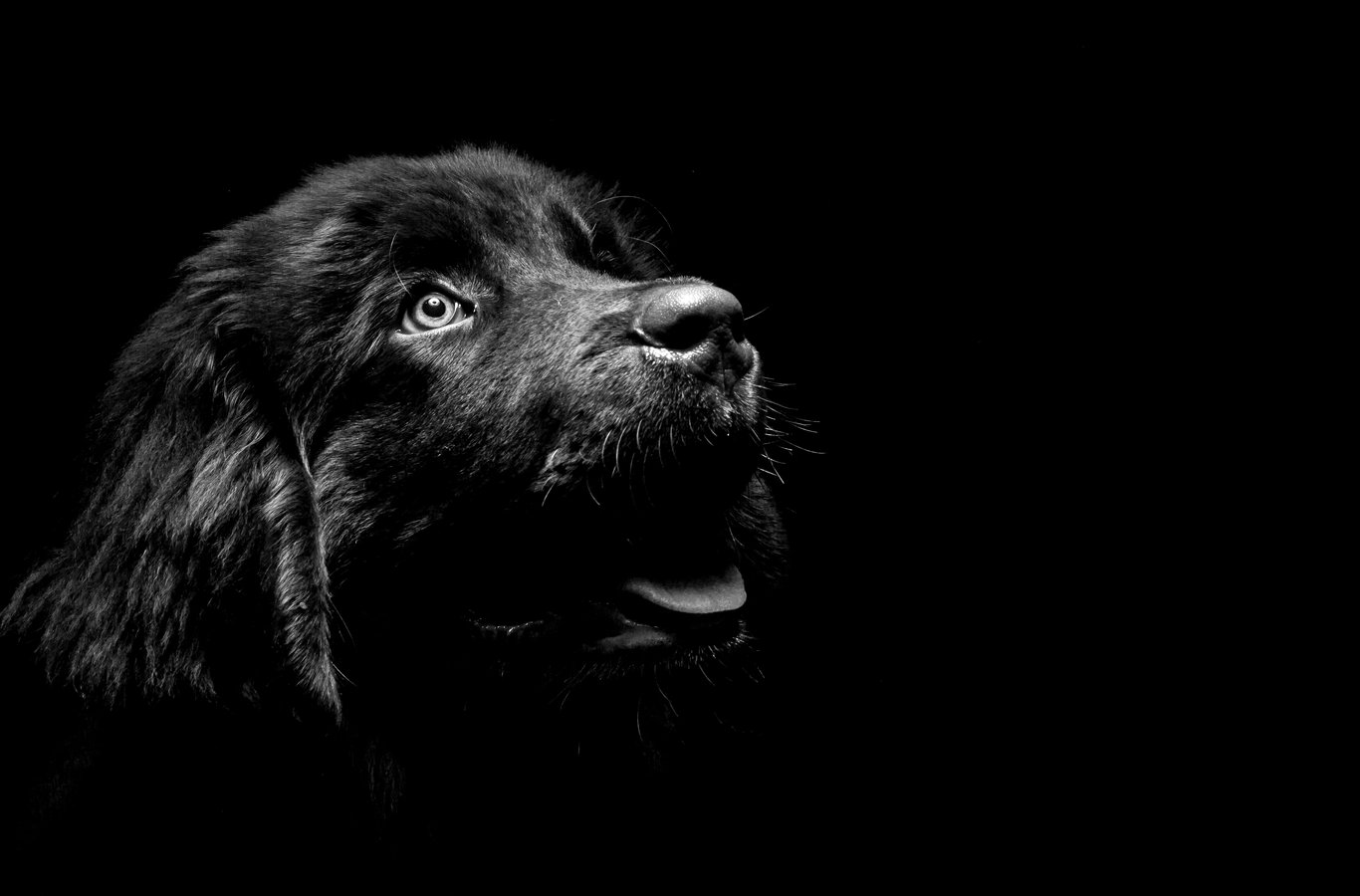
The best way to prepare your dog for a portrait session is a proper walk or play beforehand to take the edge off their energy, their usual treats and a favourite toy close at hand to hold their attention, and grooming booked a day or two ahead rather than the same morning. Bring them fed and on lead, and give them a few minutes to settle into the space before we start. None of this needs to be complicated. A calm, well-exercised dog who trusts the people around them is already most of the way to a beautiful portrait.
Exercise them properly beforehand
Every dog is different, but most portraits benefit from a dog who has already had a run around before the camera comes out. A long walk, a solid game of fetch, or a swim if that is their thing, an hour or two before the session takes the initial burst of energy out of them without leaving them flat and tired. You are aiming for the calm, alert middle ground where they are happy to sit still for a moment but still bright-eyed and interested in what is going on around them.
If your dog is naturally low-key, a shorter walk is plenty. If they are the bouncy, can't-sit-still type, give them more time and more distance. It is worth knowing your own dog well enough to judge this, because the goal is a dog who is settled, not one who is worn out and disengaged.
Pack treats and their favourite toy
Bring what actually works at home. If your dog will do anything for a particular treat, bring a generous supply of it rather than something new and untested. The same goes for toys: a squeaky favourite or a ball they love is often the single best tool for getting a genuine, ears-up, focused expression. New treats and new toys can work too, but familiar ones are more reliable because your dog already associates them with good things.
I direct sessions rather than pose them, so having a toy or treat that reliably gets your dog's attention gives me something real to work with instead of a forced sit-and-stare. The moments that end up meaning the most are usually the unplanned ones: the head tilt at a squeak, the tail mid-wag, the exact way your dog looks at you when you crouch down and call their name.
Time the grooming right
If your dog is due for a bath, book it a day or two before the session rather than the morning of. Freshly washed dogs often get the zoomies, roll in whatever they can find, or simply feel odd in their own coat for a while afterwards. A day's grace gives everything time to settle down and their coat time to fall naturally, which photographs better than a coat that is still drying or standing up from a fresh wash.
A light brush on the morning of the session is usually all that is needed on top of that. If your dog has a particular collar or bandana you love, bring it along, and check that nails are trimmed if that is something you usually stay on top of.
Studio or on location
Some families prefer the calm and control of the studio gallery in Belgrave. Others want their dog captured somewhere familiar, on a favourite walking track or in the garden they know best. Both work well, and which one suits your dog often comes down to temperament. A dog who is nervous of new spaces can do better on their own turf, while a dog who is generally easygoing anywhere will settle into the studio just as happily.
If you are planning an outdoor session, it is worth reading what happens if it rains on the day, since weather is one of the few things nobody can plan around and it helps to know the options in advance. We talk through studio and location choices properly at your consultation, once we know your dog and what will bring out the best in them.
Every dog is a family member, and the portraits should feel like it
Dogs are rarely just "the pet" in a family portrait. They are usually the one who greets everyone at the door, sleeps on the good couch when nobody is looking, and turns up in half the family's favourite memories already. The aim of a dog portrait session is to bring that same presence into a piece of artwork you will actually display, not a stiff studio grab that looks like it belongs to a stranger's dog.
A relaxed dog gives you a portrait with actual personality in it. A stressed one just gives you a portrait of a dog sitting still.
That is the whole point of the preparation above. None of it is about achieving a perfect pose. It is about getting your dog comfortable enough that who they truly are can come through.
If you have other animals too
If your family includes horses as well as dogs, or you are weighing up a session that covers both, it is worth having a look at our guide to equine portrait sessions, since horses need a different kind of preparation again. And if you are still deciding what kind of pet portrait suits your family, our overview of pet portraits in Melbourne covers the range of sessions we offer and how they typically run.
On the day
Arrive a little early if you can, so your dog has time to sniff around and settle before we start rather than walking straight into the session mid-excitement. Keep them on lead until we are ready, bring water if it is a warm day, and let me know about any quirks, fears or favourite games in advance so I can build the session around them. The families who get the most relaxed, natural portraits are usually the ones who came prepared but did not over-rehearse. Your dog does not need to perform. They just need to be themselves, with a bit of help getting there.
Every portrait begins with a conversation at the Belgrave gallery.