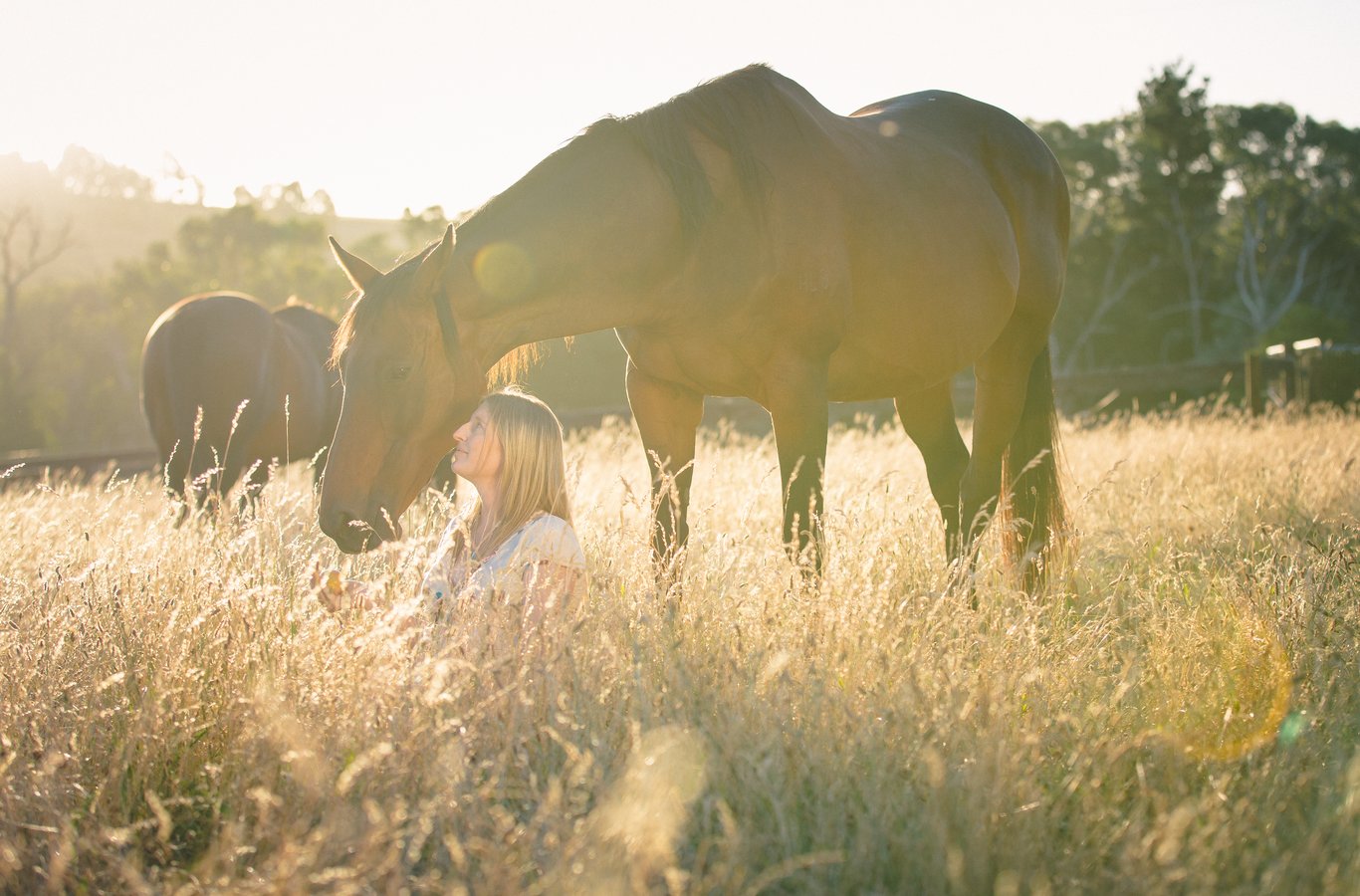
Horse portrait photography in Victoria works best done on location, at the property or agistment where the horse already feels settled, timed around sunrise or sunset so the light sits low and soft on the coat. The portrait that actually means something to an owner is rarely the horse alone. It's the horse with them, in the paddock they already share, at the hour of day the horse already knows.
Why the bond is the real subject
Anyone can point a camera at a horse standing in a field. What's harder, and what actually holds up on a wall for years, is a portrait that shows what the horse means to the person standing next to it. That might be a young rider leaning into a neck, a longtime owner with a hand resting flat against a shoulder, or the particular stillness between a horse and the person who feeds it every morning. I direct sessions rather than posing them, because the moments worth keeping are the ones that happen when two creatures who trust each other are simply left to be near one another. My approach to family portraits works the same way, and a horse and its owner are, in every sense that matters, a family.
On location, not in a studio
A horse doesn't travel well to a studio, and it shouldn't have to. Every equine session happens on location, usually at the property or agistment where the horse lives. That familiarity does real work. A horse that's anxious around strange spaces, floats, or crowds will often settle within minutes once it's standing in its own paddock with its own person. If you're working out how to prepare a nervous horse, or any horse, for a session like this, the companion guide on session preparation for a horse portrait walks through timing, handling, and what to expect on the day.
Golden light on a horse's coat
Sunrise and sunset do something for a horse's coat that flat midday light never will. Low sun catches the sheen along a bay or chestnut coat, throws long shadows across the grass, and wraps the whole scene in the kind of warmth that reads as a proper portrait rather than a quick snapshot. It's the same reasoning behind golden hour sessions in the Dandenongs, just applied to a paddock instead of a hillside. Sessions are timed to that light and to the horse's own routine, since a horse that's just been fed or is expecting its evening hay won't settle for a camera, however good the light is.
What a session actually looks like
The process runs the same three meetings as every other portrait at Five Castles. First, a consultation at the Belgrave gallery, where you see finished artwork on the wall and the full price list, and we plan the session around your horse, your property, and the light. Second, the session itself, at your place or agistment, timed to sunrise or sunset and to your horse's temperament. Third, a viewing and design appointment within a week, where you look through the full set and choose what becomes artwork.
That consultation matters more for an equine session than most people expect. It's where we talk through the property itself: which paddock catches the best light at which hour, whether the horse is more settled being led or being left loose, and who else should be in the frame. A partner who does the morning feed, a child who rides, or a whole family who shares the care of the animal can all be part of the same session. None of that gets worked out on the day. It gets worked out beforehand, so the session itself is calm rather than rushed.
For families with both a horse and a dog or cat in the picture, it's worth knowing the same on-location, golden-hour approach carries across to our pet portrait sessions in Melbourne too. Many owners book both animals into the one visit, which also means one consultation and one viewing appointment rather than two separate processes.
Artwork sized for the subject
A horse is a large, physical presence, and the artwork should reflect that. A single horse portrait tends to suit the larger end of our premium canvas range, from 11x14 inches up to 36x55 inches, wrapped or framed, displayed in a stable office, hallway, or above a mantel. For owners who want more than one image, a multi-piece Wall Art Collection, such as Casterly Rock or Highgarden, lets a hero shot of horse and owner sit alongside smaller portraits from the same session, all designed together at the viewing appointment rather than chosen piece by piece afterward.
A Designer Portfolio Print or a smaller Keepsake Art Album has its place too, particularly for a family who wants the full set of images to hold rather than a single wall piece. But the horse and owner shot, the one that shows the actual relationship rather than a conformation-style pose, is almost always the piece families want large. It's the one that gets talked about, and the one that still means something on the wall a decade on, when the horse itself may no longer be there.
The horse that trusts you enough to stand still while you lean your head against its neck is the horse worth putting on the wall.
Getting a session on the calendar
Most families who book an equine portrait aren't chasing a generic horse photo. They want the specific, ordinary truth of what that horse is to them, on the land they already share, in light that does the coat justice. That starts with a consultation, where we talk through your horse, your property, and what you'd want on the wall. Most families invest between $1,500 and $3,000 on finished artwork, with payment plans available, and full pricing is shown openly at that first meeting rather than quoted over the phone.
If you're deciding what to wear for the human half of the portrait, our free family styling guide covers that too, and the full product guide sets out every artwork size and collection in detail.
Every portrait begins with a conversation at the Belgrave gallery.