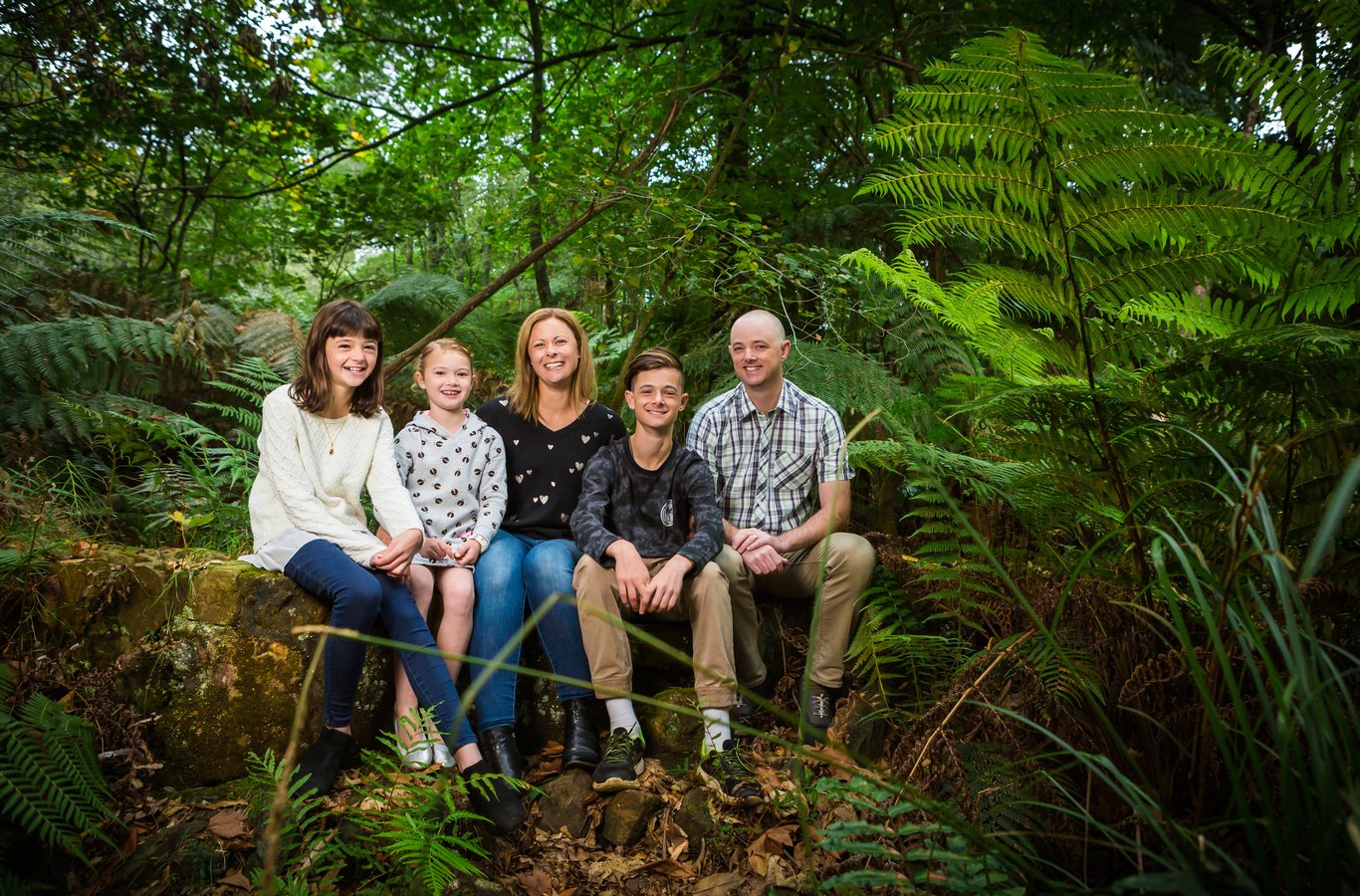
Blended family photoshoot ideas work best when you stop trying to fit everyone into one perfect pose and instead plan a small set of groupings that reflect how the family actually lives, the whole household together, each parent with their own children, siblings and step-siblings who've grown close, maybe a pair who share a particular bond. You decide which combinations matter at the consultation, before the camera comes out, so nobody is standing around on the day wondering where they fit.
Why one big group shot usually isn't the answer
A single formal portrait tends to flatten a blended family into something it isn't. It asks everyone to look equally connected to everyone else, when the truth of a blended household is more layered than that, closer with some people, still finding their footing with others, and that's a normal part of how new families settle. A collection of a few honest groupings, rather than one posed compromise, tends to sit better on the wall and better in the family's memory of the day. That's what wall art collections are built for, multiple pieces that each hold a different relationship, displayed together rather than squeezed into one frame.
There's no rule that says a blended family has to prove how close everyone is on day one. Some pairings will feel obvious to plan for, a new sibling bond that's already firm, a parent and their own children who've always had their rhythm. Others might only make sense in a year or two, once a relationship has had time to grow into itself. Planning honestly for where things stand now, rather than where you hope they'll be, tends to produce artwork the family actually wants to look at.
Planning the groupings that matter
This is where the consultation earns its place. Rather than guessing on the day, we sit down beforehand and talk through who's part of this family and how, then map out a short shot list. Common groupings blended families ask for include:
- The whole household together, however that's currently made up
- Each parent with their own biological children
- All the children together, without the adults
- Step-siblings or half-siblings who've become close, on their own
- Any pairing that has a story behind it, a particular closeness worth its own piece
You don't need all of these. Three or four honest groupings usually says more than one that tries to cover everything. If you'd like more detail on how we work through these decisions together, what to expect at the first consultation walks through the whole process.
When not everyone lives under the same roof
Custody arrangements, shared care, and children who spend part of the week elsewhere are all common in blended families, and none of it needs to complicate the session. We plan around whoever will be there on the day. If a full group isn't possible yet, or won't be for a while, that's fine. Families often start with the groupings they can do now and add a piece later once the shape of things has settled or changed. The collections are built to grow that way, not locked to a single moment.
Including grandparents and extended relationships
Blended families often carry extended relationships too, a grandparent who's stepped into a bigger role, a new partner's parents who've become part of the fabric of things. If you're weighing up how far to extend the session beyond the immediate household, our guide to planning an extended family portrait covers how we handle larger groups without losing the individual relationships inside them.
Older children and teenagers in a blended household
Teenagers settling into a blended family often have strong feelings about how they're grouped, and that's worth respecting rather than working around. Arek directs the session rather than posing it, so older kids aren't asked to perform a closeness that isn't there yet, and the more natural, unscripted approach tends to put them at ease faster than a formal sitting would. Giving a teenager a say in which groupings they're part of, and which they'd rather sit out, often does more for the day than any amount of persuading. If teenagers are part of your family, our guide to portraits with teenagers has more on getting them genuinely on board.
A blended family on a wall doesn't need to pretend it was always one shape. It just needs to look like what it actually is now, and that's plenty.
What the session itself looks like
Once the groupings are set, the session is timed around sunrise or sunset and around the ages and routines of the children involved, whether that's at the studio or on location. Arek works with relationships as they present on the day rather than directing a formal pose, which tends to relax families who are still finding their new rhythm together. Nothing about the groupings needs to be decided again once the session starts, that groundwork is already done.
Choosing the artwork afterwards
Within a week of the session, you'll come back for the viewing and design appointment, where you choose favourites and design the finished pieces. This is often where the planning pays off, because you're not deciding between one photo of everyone or nothing, you're choosing how several honest pieces sit together as a collection. Prices are shown openly at that appointment, and most families invest between $1,500 and $3,000, with payment plans available if that helps.
Finished pieces are artisan printed and hand-finished, ready for collection within three weeks of the design appointment. If you'd like a sense of the products before you come in, the product guide covers the full range, from individual canvas pieces to multi-piece collections.
Every portrait begins with a conversation at the Belgrave gallery.